Governing Data Across Borders: A Strategic Framework for Multi-Region Cloud Compliance
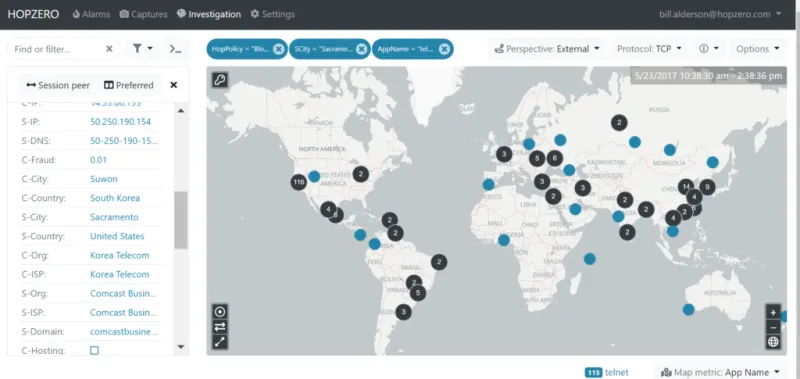
Photo: enterprise data compliance cloud security global network map business, via cam.scmagazine.com
The compliance environment that American enterprises navigated five years ago was demanding but comprehensible. HIPAA governed healthcare data. PCI DSS applied to payment processing. A legal team with cloud experience could map requirements to architecture with reasonable confidence. That clarity has largely dissolved.
Today, a mid-market enterprise operating in healthcare-adjacent services might simultaneously contend with HIPAA's data handling requirements, GDPR obligations for European customer records, California Consumer Privacy Act (CCPA) mandates, Texas and Virginia privacy statutes that diverge meaningfully from California's model, and sector-specific federal guidance that continues to evolve. When this regulatory patchwork is layered over a multi-region cloud deployment spanning US East, US West, and European availability zones, the architectural decisions that determine compliance outcomes become genuinely consequential—and genuinely difficult.
This is not a theoretical concern. Audit failure rates in multi-region cloud environments have increased substantially as regulators have developed greater technical sophistication. The organizations bearing the highest risk are those that designed their cloud architectures for performance and cost efficiency without building compliance governance in from the outset.
Why Multi-Region Architectures Create Compliance Exposure
The fundamental tension in distributed cloud compliance is that the properties that make multi-region deployments operationally attractive—data replication, geographic redundancy, latency optimization—are precisely the properties that create regulatory exposure.
Consider a straightforward example. An enterprise deploys a SaaS application with primary compute in AWS us-east-1 and a disaster recovery replica in eu-west-1 for resilience. Under GDPR, any personal data belonging to EU residents that replicates to that European region may trigger data processing obligations the enterprise did not anticipate, including requirements around data subject rights, retention schedules, and cross-border transfer documentation. The infrastructure team made a sound technical decision. The legal and compliance team was not in the room.
This disconnect between technical architecture decisions and regulatory consequence is the most common source of audit vulnerability in enterprise cloud environments. Closing it requires structural changes to how organizations govern cloud deployment decisions—not just better documentation after the fact.
Understanding Data Residency vs. Data Sovereignty: A Critical Distinction
These terms are frequently used interchangeably in enterprise conversations, and that conflation creates real risk. They describe meaningfully different concepts with different compliance implications.
Data residency refers to the physical or geographic location where data is stored. A data residency requirement mandates that certain data remain within a specified jurisdiction—for example, that health records of German citizens be stored on servers physically located within Germany. Cloud providers accommodate this through region selection and storage class configuration.
Data sovereignty is a broader concept. It refers to which nation's laws govern the data, regardless of where it physically resides. US cloud providers operating in European regions remain subject to certain US legal authorities under frameworks such as the CLOUD Act, which can compel disclosure of data stored anywhere in the world by US-headquartered providers. For enterprises serving clients in jurisdictions with strict sovereignty requirements—particularly in financial services and government contracting—this distinction is not academic. It determines whether a given cloud provider is compliant at all, independent of region selection.
Enterprises that understand only residency requirements but not sovereignty implications have built architectures that satisfy the letter of their compliance obligations while potentially violating their spirit—and exposing themselves to enforcement action as regulators develop greater technical literacy.
A Decision Framework for Multi-Region Deployment Models
Organizations facing multi-region compliance complexity benefit from a structured decision process rather than ad hoc architectural choices. The following framework, organized around four evaluative dimensions, provides a starting point.
Regulatory Inventory First. Before any architectural decision is made, compliance and legal teams must produce a complete inventory of applicable regulations, organized by data classification. This inventory should specify, for each regulation, whether it imposes residency requirements, sovereignty requirements, retention mandates, or specific security control obligations. This document becomes the authoritative input to architecture decisions.
Data Classification and Flow Mapping. The second dimension requires understanding not just where data is stored at rest, but where it travels during processing. Many enterprises discover during audit preparation that data they believed was jurisdictionally contained had been flowing through logging pipelines, analytics platforms, or third-party integrations that crossed regulatory boundaries. A complete data flow map, maintained as a living document and updated when architecture changes are made, is a non-negotiable compliance foundation.
Deployment Model Selection. With regulatory requirements and data flows documented, enterprises can make informed choices among three primary deployment models: single-region with geo-redundancy within jurisdiction, active-active multi-region with data partitioning by residency requirement, and hybrid cloud with sovereign cloud instances for highest-sensitivity workloads. Each model involves tradeoffs across cost, operational complexity, and compliance coverage. The right choice is not universal—it depends on the specific regulatory profile of the organization and the sensitivity distribution of its data.
Continuous Compliance Monitoring. Compliance is not a state achieved at deployment and maintained passively. Regulatory requirements change. Cloud provider service offerings evolve in ways that affect data handling. Engineering teams make configuration changes that alter data flows. Enterprises that treat compliance as a periodic audit exercise rather than a continuous operational discipline consistently accumulate the exposure that leads to costly findings.
Common Pitfalls That Lead to Audit Failures
Three patterns recur with notable frequency in post-audit analyses of multi-region compliance failures.
The first is shadow replication—the unintended copying of regulated data into regions or services outside the compliance perimeter. This most commonly occurs through managed database features that automatically replicate for performance, backup services configured without region constraints, or analytics pipelines that aggregate data from multiple sources without jurisdiction filtering.
The second is third-party vendor sprawl. Enterprises manage their own cloud infrastructure carefully but fail to apply equivalent scrutiny to the SaaS tools and managed services that process their data. A marketing automation platform, a customer support ticketing system, or a business intelligence tool may handle regulated data and operate infrastructure in jurisdictions that violate residency requirements. Vendor due diligence processes must extend to sub-processor data handling practices.
The third is configuration drift. An architecture that satisfies compliance requirements at launch may cease to do so six months later as teams make incremental changes to improve performance or reduce costs. Without automated compliance monitoring that detects configuration changes affecting data residency or security controls, these drifts accumulate silently until an audit makes them visible—at significant cost.
The Organizational Capability Gap
Perhaps the most honest observation about multi-region cloud compliance is that it has outpaced the organizational structures most enterprises built to manage it. Legal teams understand regulatory requirements but not cloud architecture. Engineering teams understand distributed systems but not regulatory nuance. Compliance functions often sit between these groups without the technical depth to bridge them effectively.
Enterprises that navigate this landscape successfully have invested in building genuine cross-functional capability—compliance engineers who speak both languages, governance processes that require regulatory review before architectural decisions are finalized, and executive accountability structures that treat compliance failure as an operational risk with financial consequence, not an abstract legal concern.
The regulatory environment will continue to grow more complex. State-level privacy laws will continue to proliferate. International data frameworks will continue to evolve in response to geopolitical pressures. Enterprises that build the organizational and architectural foundation for compliance governance now will manage that complexity at manageable cost. Those that defer will find the remediation bill considerably higher.