Beyond Single-Cloud Dependency: How Mid-Market Enterprises Are Rearchitecting for Resilience
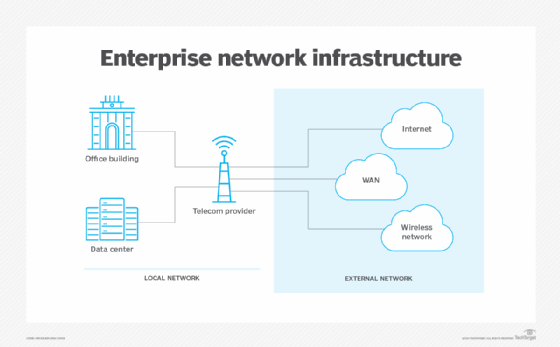
Photo: enterprise multi-cloud server infrastructure data center network, via cdn.ttgtmedia.com
For years, the prevailing wisdom among mid-market IT leaders was straightforward: choose a reputable cloud provider, consolidate your workloads, and optimize from there. That logic made sense when cloud adoption itself was the primary challenge. Today, however, the calculus has changed considerably. Organizations with annual revenues between $50 million and $1 billion are discovering that single-cloud environments — once celebrated for their simplicity — carry risks that grow more consequential as digital infrastructure becomes central to revenue generation.
At FB-68 Cloud, we work closely with enterprises navigating this transition, and the pattern is consistent: the question is no longer whether to adopt a multi-cloud strategy, but how to do so without destabilizing the teams and budgets already stretched thin.
The Vendor Lock-In Problem Is Becoming Measurable
Vendor lock-in has long been a theoretical concern discussed in boardrooms and IT conferences. It is now producing tangible financial consequences. When a primary cloud provider experiences a regional outage — as major platforms have done repeatedly in recent years — businesses without alternative infrastructure face downtime that translates directly into lost transactions, damaged customer relationships, and potential SLA violations.
Beyond outages, pricing leverage is a subtler but equally significant issue. As organizations deepen their dependency on a single platform's proprietary services — managed databases, serverless functions, AI tooling — they lose negotiating power at contract renewal. A 2023 survey by Flexera found that 82 percent of enterprises identified cloud cost optimization as their top challenge, and a significant portion attributed overspending to the difficulty of migrating away from deeply embedded provider-specific services.
For mid-market companies, this dynamic is particularly acute. Unlike large enterprises with dedicated cloud governance teams, mid-sized organizations often lack the internal resources to monitor and challenge vendor pricing structures on an ongoing basis.
What Multi-Cloud Actually Means in Practice
It is worth clarifying a common misconception: multi-cloud architecture does not require running identical workloads across every major provider simultaneously. That approach introduces complexity without proportional benefit. A more practical definition — and the one most successfully adopted by mid-market firms — involves deliberately distributing workloads based on each provider's genuine strengths.
For example, a manufacturing company in the Midwest might run its ERP-adjacent data processing on one platform known for relational database performance, while hosting its customer-facing analytics portal on a second provider offering superior edge network distribution across North America. A third environment, potentially a private or colocation deployment, might handle sensitive compliance data that regulatory requirements prohibit from residing in public cloud infrastructure.
This workload-appropriate distribution is the foundation of effective multi-cloud strategy. It requires honest capability assessment — both of your internal team and of the providers under consideration.
Real Adoption Barriers Facing Mid-Market IT Teams
Despite the strategic logic, adoption barriers are real and should not be minimized. The most commonly cited challenges among mid-market IT directors include:
Operational complexity. Managing multiple provider consoles, billing structures, security configurations, and API ecosystems simultaneously demands mature tooling and skilled personnel. Organizations that attempt multi-cloud without investing in a unified management layer — whether through a cloud management platform or a managed services partner — frequently find that complexity costs exceed the benefits gained.
Skills gaps. Proficiency in one cloud platform does not transfer automatically to another. AWS-certified engineers require meaningful training time to operate effectively in Azure or Google Cloud environments. For mid-sized companies with lean IT departments, this retraining investment is a genuine constraint.
Networking and data transfer costs. Moving data between cloud environments generates egress fees that can erode cost projections if not modeled carefully during the planning phase. This is a frequently underestimated line item in multi-cloud budgets.
Security posture fragmentation. Each provider operates a distinct identity and access management framework. Without a centralized security information and event management (SIEM) strategy, multi-cloud environments can create blind spots that single-cloud deployments do not.
A Cost-Benefit Framework Worth Applying
The financial case for multi-cloud is not automatic — it requires structured analysis. Organizations should evaluate the following dimensions before committing to an architecture overhaul:
Risk-adjusted downtime cost. Calculate the hourly revenue impact of a primary cloud outage. Multiply that figure by your provider's historical availability record. Compare the resulting expected loss against the annual cost of maintaining a secondary environment capable of absorbing critical workloads.
Negotiation leverage value. Quantify the pricing flexibility gained by maintaining active spend relationships with multiple providers. Even modest competitive tension at renewal can yield 10 to 20 percent reductions on committed use contracts.
Workload optimization savings. Identify workloads currently running on a primary provider that would perform better — or cost less — on an alternative platform. Compute savings should be modeled over a 36-month horizon to account for migration costs.
When these three dimensions are modeled honestly, multi-cloud typically demonstrates a positive return for organizations spending more than $500,000 annually on cloud infrastructure.
Practical Implementation Without Overwhelming Your Team
The most successful multi-cloud transitions among mid-market enterprises share a common characteristic: they begin with a single, well-defined use case rather than a wholesale infrastructure migration.
A practical starting point is disaster recovery. Configuring a secondary cloud environment to receive backup workloads and provide failover capacity is relatively contained in scope, delivers immediate risk reduction, and builds organizational familiarity with multi-provider operations before more complex workloads are distributed.
From that foundation, teams can progressively expand their multi-cloud footprint — adding new workloads to secondary environments as confidence and tooling maturity develop. This phased approach prevents the operational overwhelm that derails more ambitious, big-bang migration strategies.
Investing in a cloud-agnostic orchestration layer — Kubernetes-based container management being the most widely adopted approach — significantly reduces the long-term complexity burden. Containerized workloads are inherently more portable, which preserves future flexibility as provider capabilities and pricing structures evolve.
The Strategic Imperative Is Clear
Mid-market enterprises operating in competitive US industries — financial services, healthcare technology, logistics, retail — cannot afford the fragility that single-cloud dependency introduces. The market conditions that made vendor consolidation attractive a decade ago have fundamentally shifted. Provider pricing power has grown, outage frequency has not meaningfully declined, and the performance differentiation between platforms has become significant enough to justify workload distribution.
Multi-cloud architecture is not a project to be indefinitely deferred. For organizations that have not yet begun the transition, the most productive first step is an honest audit of current cloud spend, workload characteristics, and downtime risk exposure. That audit will almost always surface the business case on its own.
The enterprises that build resilient, distributed cloud infrastructure today are positioning themselves to operate with greater agility, stronger vendor leverage, and reduced existential risk as digital infrastructure becomes ever more central to how American businesses compete.